The Eid table, laid for home
Eid food is not merely a spread, but a way of bringing a scattered family back into one room.
heritage · Royal Lahori Chef Kitchen · 21 March 2026 · 7 min read
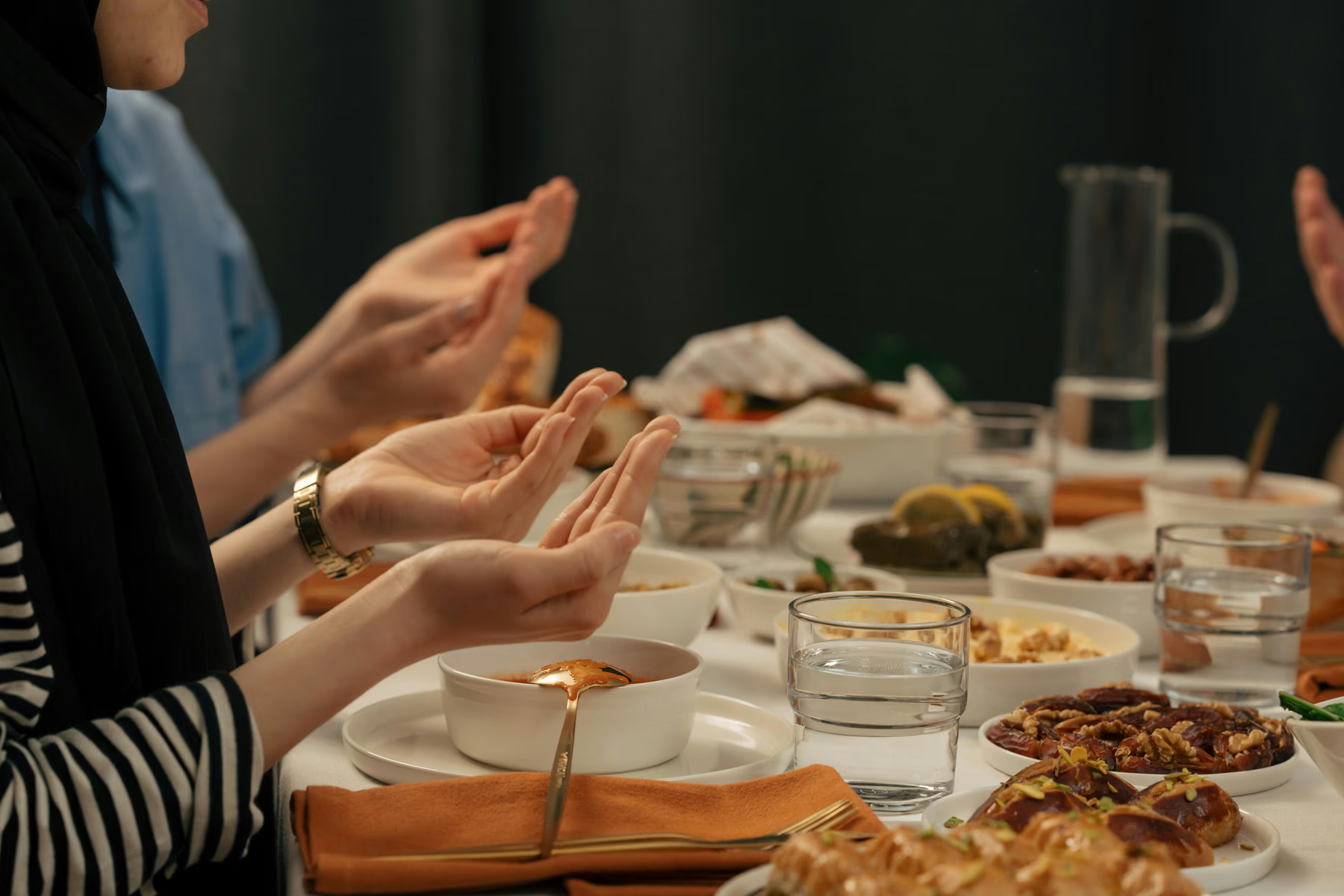
There is a particular sound to an Eid table before anyone has properly sat down. It is not the clatter of a restaurant service or the clipped choreography of a formal dinner. It is softer and more complicated: foil being loosened, cousins calling across a hallway, someone asking where the serving spoons have gone, a child lifting a lid too early and being shooed away with a smile. The day has already carried prayer, greetings, perfume, ironed clothes, envelopes, messages from relatives who could not come. By the time the food appears, the room is full before the plates are.
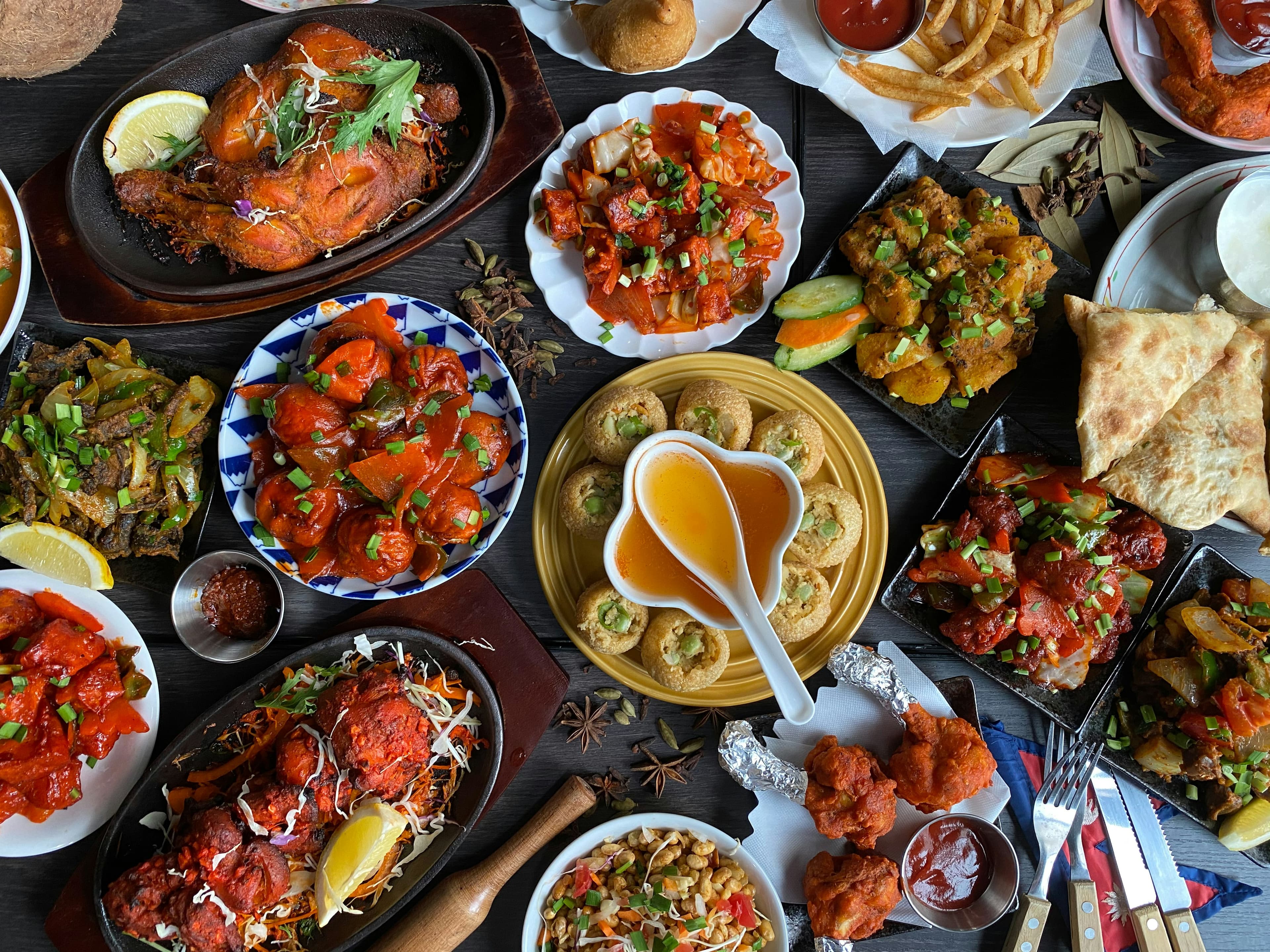
An Eid feast has to hold all of that without making a performance of itself. It must be generous, of course, but generosity is not only quantity. It is the confidence that there will be something for everyone: juicy chicken tikka for the person who wants the first smoky bite, seekh kebabs with their peppered warmth, crisp samosas that leave flakes on napkins, fresh green salad and chana chaat to cut through the richness. These are not just starters. They are the first act of welcome.
The first plate at Eid is rarely neat. It is a small map of anticipation.
Then come the dishes that make people slow down. Lamb biryani, aromatic and layered, carries more than rice and meat; it carries the promise that someone has thought about timing. Rice is unforgiving when it sits too long. Meat is unforgiving when it is rushed. The pleasure of biryani is in the way the grains stay separate whilst still carrying spice, the way steam rises with saffron-coloured warmth, the way a spoonful can contain tenderness, fragrance and a little resistance all at once.
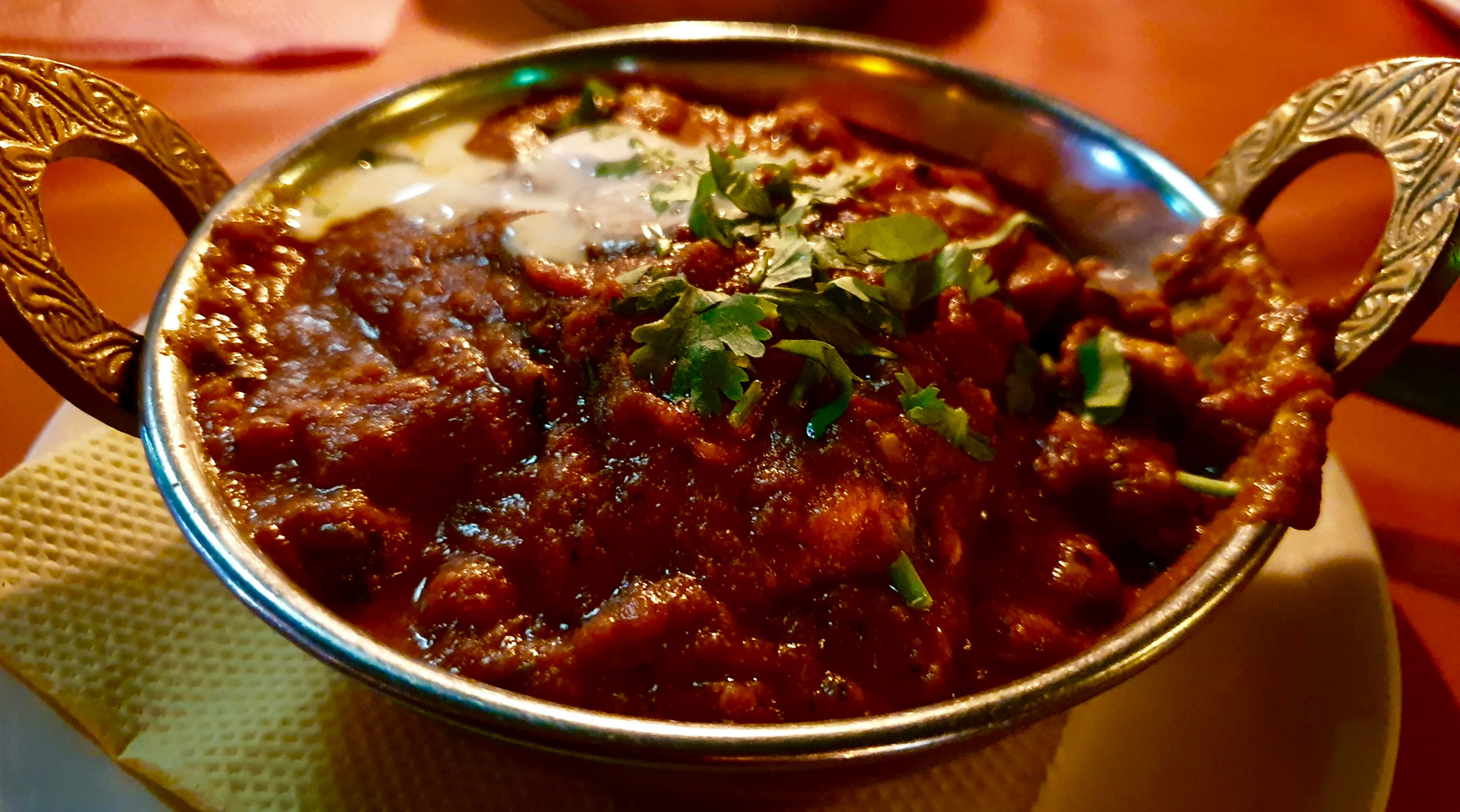
Mutton karahi belongs to a different register. It is louder on the table, not in volume but in presence: gloss at the edge of the masala, tomato reduced into seriousness, ginger lifting through the richness, meat that asks to be eaten with bread rather than admired from a distance. Daal makhni, by contrast, brings the room down a notch. It is the dish people return to when the first excitement has passed, the spoon slipping through something creamy, dark and patient.
Eid also has a rhythm particular to British homes. Coats are piled upstairs. Someone has parked badly outside and will need to move the car later. The elders are given the good chairs. Teenagers drift between the kitchen and the living room, half helpful, half hungry. A table may be extended with another table, then with a tray, then with a clean tea towel over the arm of a sofa because space is never quite enough. This is the point of it. Eid is not a still-life. It is a house becoming elastic.
What matters is that the food does not fight the day. It should not demand explanation from a family already full of greetings. It should arrive legible and fragrant: kebabs, chaat, biryani, karahi, daal, gulab jamun, gajjar ka halwa, vanilla ice cream for those who want cold sweetness after spice. The dishes have enough character to carry the occasion, but they also know their job is to support the gathering rather than dominate it.
A celebration table succeeds when people forget to be impressed and simply begin passing plates.
There is a certain tenderness in watching the sweet course appear after a meal like this. Gulab jamun glistening in syrup can make grown adults oddly childlike. Gajjar ka halwa has its own deep comfort: carrot cooked down until it becomes more memory than vegetable, warm with ghee and cardamom, capable of silencing a table for a few seconds. Vanilla ice cream might sound plain until it meets the heat of halwa or syrup; then it becomes the sensible, cooling friend every rich dessert needs.
The phrase "laid for home" matters because Eid catering is not only about feeding guests in a hired room. Often the most emotional Eid meals happen at home, where the walls already know the family. The kitchen is too small, the hallway too busy, the tablecloth not quite long enough, and still the room feels right because everyone has found a place. Food is the hinge. It gives the day a centre.
It is tempting, with a celebration feast, to talk in grand claims. But the truth of Eid food is found in smaller evidence: the auntie who takes a little extra chaat because the tamarind has woken her appetite; the uncle who says he will have no dessert and then accepts gulab jamun; the child who eats only rice at first and later asks for kebab; the quiet satisfaction of seeing empty trays without panic because enough was planned.
In that sense, Eid food is a language of reassurance. It says: you were expected, you are being looked after, there is enough, stay a little longer. The dishes may be Lahori in spirit, but the room is unmistakably local: Birmingham weather outside, British houses stretched to fit a South Asian celebration within them, phones lighting up with messages from across the country and abroad.
A proper Eid table does not announce abundance. It lets abundance become the mood of the room.
When the meal is over, the table does not truly end. It becomes tea, foil parcels, second helpings, someone standing by the biryani with a spoon long after plates have been cleared. The day loosens. Children become sleepy. Adults sit back and speak in lower voices. What remains is not a menu but a feeling: spice in the air, brass-coloured gravy at the edge of a dish, the sweetness of halwa, and the knowledge that, for a few hours, everyone was gathered.